
Last updated September 24, 2026
Free in-home measure and quote - PGT, CGI and CWS impact lines compared on your actual openings, style by style
 Before
 After
After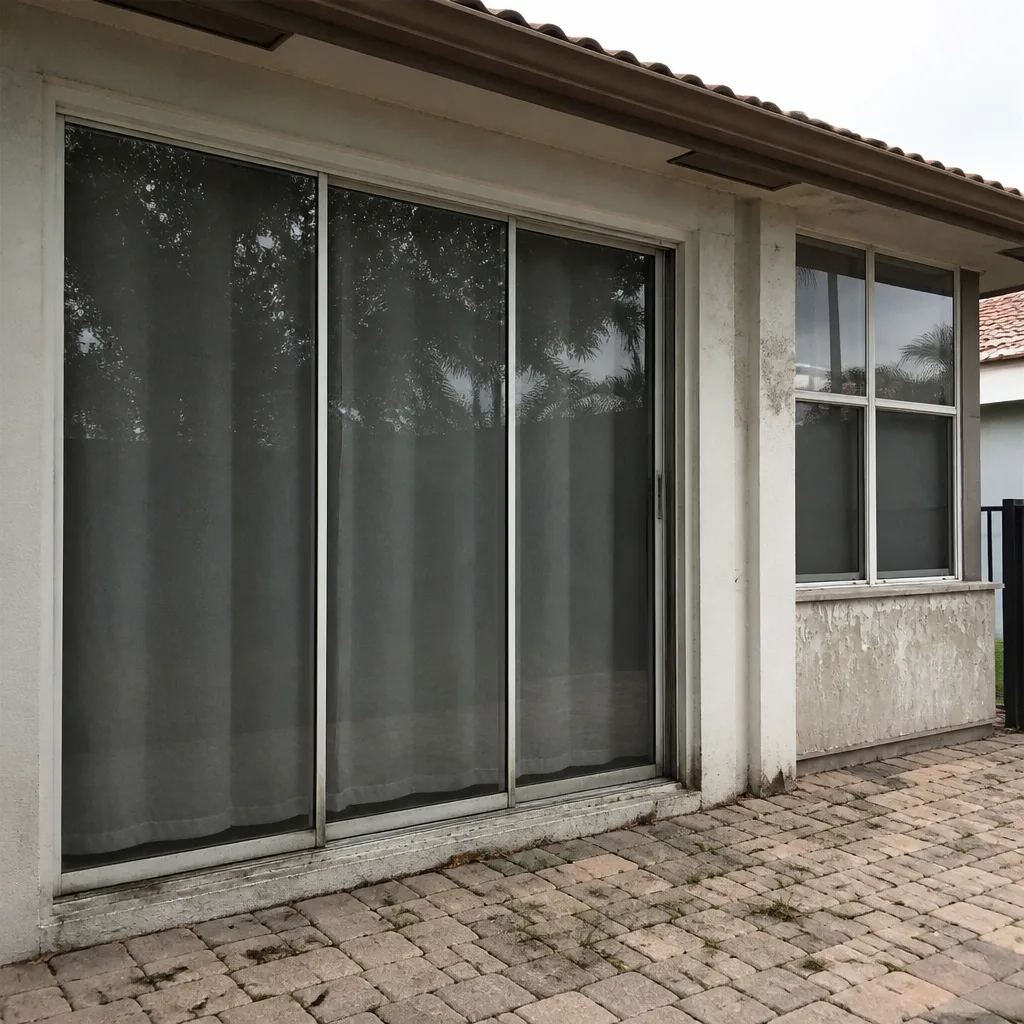 Before
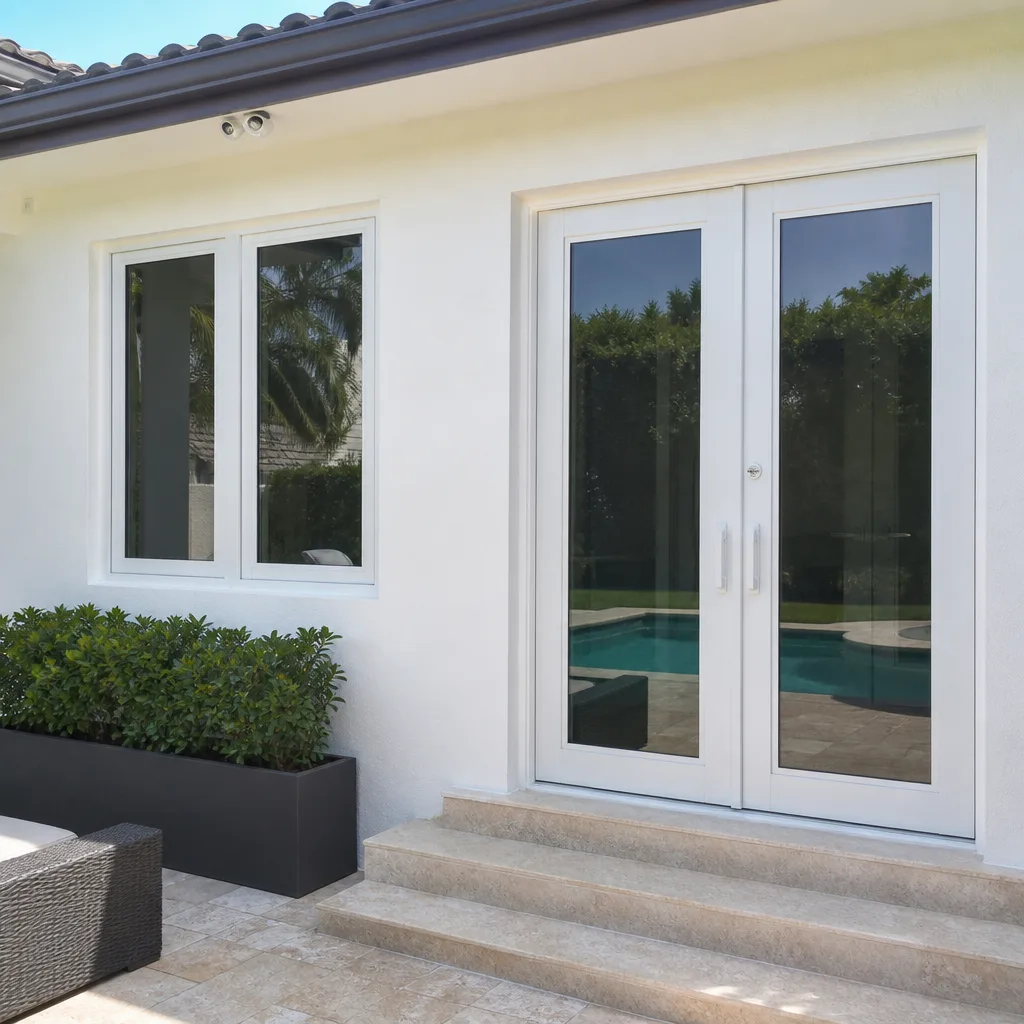 After
After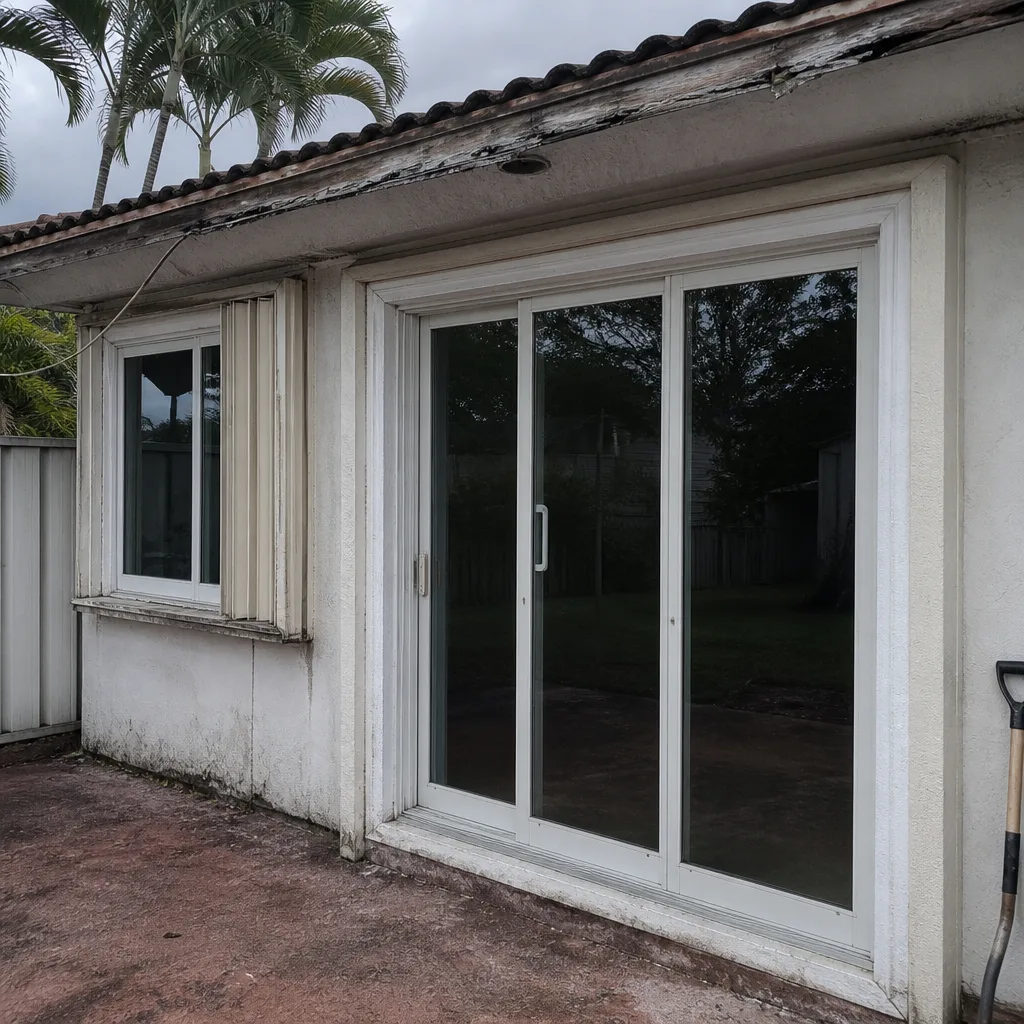 Before
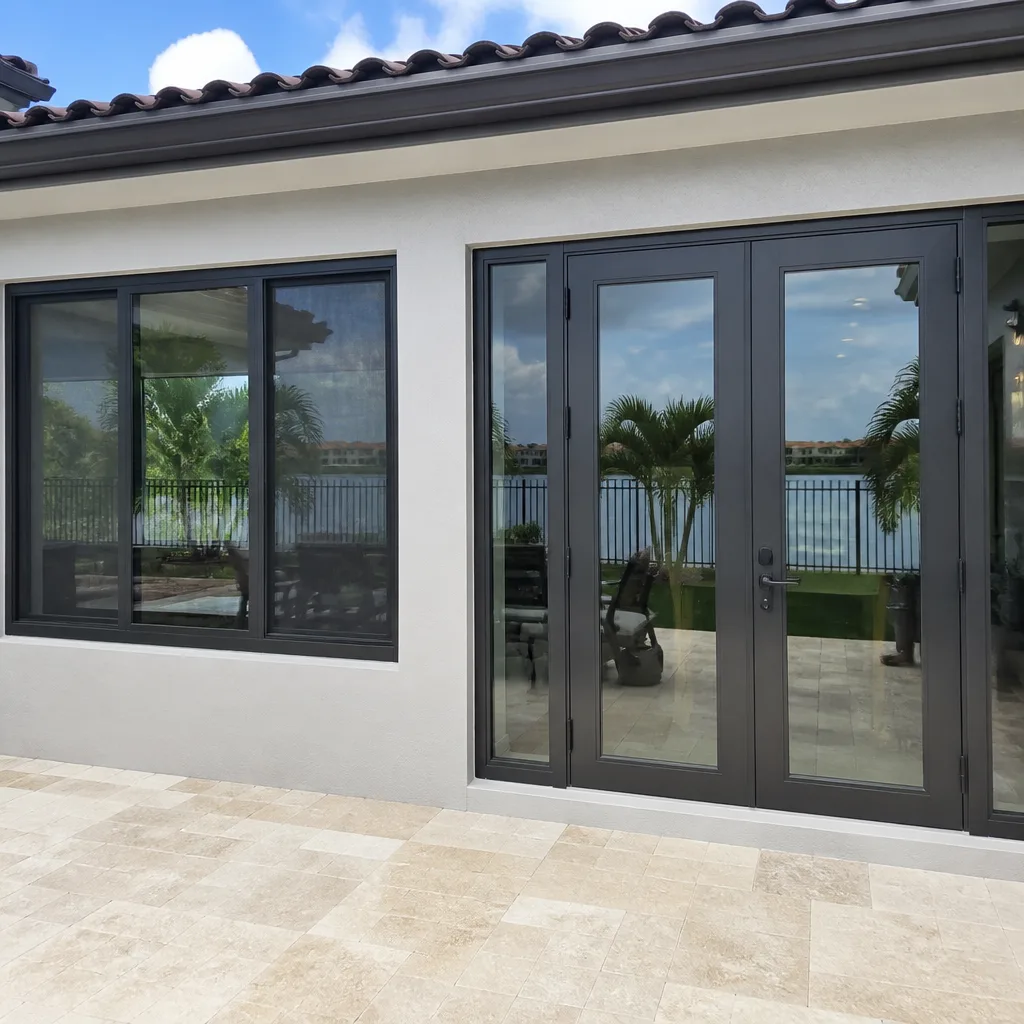 After
AfterWindows & Doors Warning Signs: A Doral Homeowner’s Reference Guide
A fogged insulated glass unit in a Doral home is not a glass problem. It is a seal failure that typically took 18 months to become visible, which means the cavity has been cycling humid South Florida air across the spacer bar for that entire period. By the time most homeowners in Doral neighborhoods like Doral Isles or The Greens notice a symptom they can name, the underlying failure has already progressed through two South Florida wet seasons. This guide works backward from eight visible warning signs to their actual root causes, classifies each by severity, and gives you a documentation method that produces evidence a contractor or insurer can use. For a deeper look at the full project scope, see The Complete Guide to Windows & Doors in Doral.
Quick Answer
The most common window and door warning signs in Doral homes - fogged glass, sticking sashes, water stains, drafts, noise increase, frame gaps, hardware failure, and paint bubbling - almost always indicate structural failures that began 6 to 18 months earlier at the frame, sealant, or flashing level. In Doral’s High-Velocity Hurricane Zone, these failures progress faster than in inland markets due to thermal cycling, salt-laden air, and code-mandated pressure cycling on impact-rated assemblies. Most symptoms require assessment by a licensed contractor; cosmetic issues can be monitored, but frame-level failures should not be deferred. If you’re weighing whether to tackle issues yourself, read DIY vs Professional Windows & Doors: The Doral Homeowner’s Decision Guide.
Table of Contents
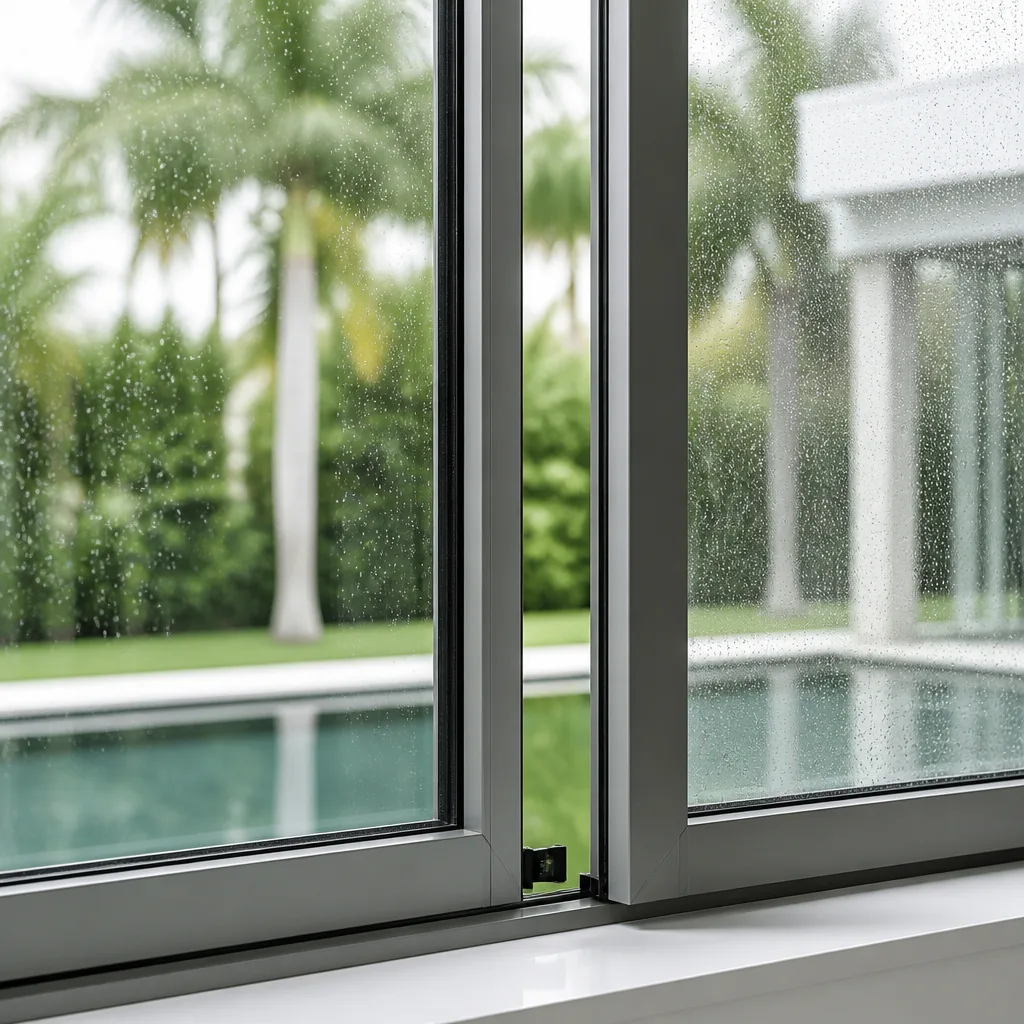
- What You See vs. What It Means: Eight Warning Signs Decoded
- HVHZ-Specific Failure Modes Doral Homeowners Face
- Severity Classification: Document, Schedule, or Stop Using
- How to Document Damage: A Photo Template for Contractors and Insurance
- Cosmetic vs. Structural: What a Homeowner Can Assess
- Miami-Dade Code Requirements That Affect Your Opening
- Common Mistakes to Avoid
- When to Call a Professional
- Frequently Asked Questions
 Before
 After
AfterWhat You See vs. What It Means: Eight Warning Signs Decoded
Every symptom tells a story that started before you noticed it. Here is what we have found in 18,000+ openings across South Florida, including hundreds in Doral homes built between the 1990s and the recent construction boom.
1. Fogged or Hazed Insulated Glass
What you see: Moisture, haze, or a white mineral deposit between the two panes of a dual-pane unit.
What it means: The primary seal on the insulated glass unit (IGU) has failed. The desiccant inside the spacer bar became saturated roughly 12 to 18 months ago. In Doral, where relative humidity routinely exceeds 75% for six months of the year, that saturated desiccant has been drawing moisture into the cavity through the compromised seal every afternoon when the outer lite heats and creates negative pressure. The visible fog is the endpoint, not the beginning.
The spacer bar itself may be corroding. In coastal-influenced Doral, salt particulates accelerate corrosion of aluminum spacers. Once corrosion reaches the butyl secondary seal, the IGU is no longer repairable; it requires replacement. The frame, however, may be perfectly sound. This is why we separate frame assessment from glazing assessment on every window replacement in Doral.
2. Sticking Sashes or Difficult Operation
What you see: A window or door that used to glide and now requires force to open or close.
What it means: Frame racking, sill settlement, or hardware wear. In Doral’s expansive clay soils, particularly in newer developments where fill settling continues for three to five years, the sill pan can tilt out of level. A sill pan that was installed with proper slope (minimum 1/4 inch per foot toward the exterior) can reverse that slope as the foundation settles. The sash now binds against the frame because the frame is no longer square.
Alternatively, the balance system in a single-hung or double-hung window has failed. Constant tension coil balances fatigue after roughly 10,000 cycles. In Doral, where windows stay closed for six months of air-conditioning season and then open daily for four months, that cycle count accumulates unevenly and often surprises homeowners.
3. Water Stains on Interior Trim or Drywall
What you see: Brownish staining, paint bubbling, or soft drywall adjacent to a window or door frame.
What it means: Bulk water is entering the wall assembly faster than it can dry. The leak point is rarely where the stain appears. Water follows the path of least resistance: along the back dam of the sill pan, down the stud bay, and out at the bottom plate or a seam in the drywall. In Doral’s driving rain events, particularly during summer thunderstorms with winds above 25 mph, water can be forced behind the head flashing if the drip edge was omitted or if the cladding-to-flashing termination was sealed with caulk instead of a mechanical drip.
We have documented this repeatedly in Doral’s townhome communities, where the transition from builder-grade windows to replacement units often leaves the original head flashing intact but incompatible with the new frame depth. The water enters at the top and exits two feet below.
4. Drafts or Temperature Differential Near the Opening
What you see: A noticeable temperature drop within three feet of a closed window or door, or a candle flame that flickers near the perimeter.
What it means: Air leakage through the weatherstrip, frame joint, or installation gap. In Doral, where the design temperature is 91°F and the indoor setpoint is 72°F, a 19-degree delta across a leaky window creates significant latent load. The weatherstrip on a typical vinyl window compresses permanently after 5 to 7 years of thermal cycling. Compression set reduces the weatherstrip’s recovery; it no longer springs back to fill the gap when the sash closes.
Less commonly, the draft originates at the rough opening, not the window. If the installer foamed the gap between frame and rough opening but did not use backer rod and a compatible sealant at the exterior, the foam degrades under UV exposure and creates a direct air path. This is installation failure, not product failure, and it requires removal and proper reinstallation rather than weatherstrip replacement.
5. Increased Exterior Noise
What you see: Nothing. You hear it: traffic from NW 41st Street, aircraft from MIA, or pool equipment from the neighboring unit.
What it means: The acoustic seal has degraded. Dual-pane IGUs with dissimilar glass thickness (typically 3mm outer, 5mm inner) provide mass-air-mass damping that reduces noise transmission by 8 to 12 dB. When the IGU seal fails and the cavity fills with humid air, the damping effect collapses because the two lites are now coupled through the denser medium. The noise increase often precedes visible fogging by several months.
In Doral’s flight path and traffic corridors, we specify laminated glass or thicker asymmetric configurations from lines like ES Windows and CWS when noise is the primary complaint. The interlayer in laminated glass provides additional damping that survives seal degradation longer than standard dual-pane construction.
6. Visible Gap Between Frame and Wall
What you see: A crack or separation between the window frame and the surrounding stucco, or between the door jamb and the trim.
What it means: Structural movement or fastener failure. In Doral’s concrete block construction, the window frame is typically fastened to the concrete with tapcon screws or powder-actuated fasteners. If the fastener was overdriven, undertorqued, or placed in a mortar joint rather than the block web, it can loosen under the daily expansion and contraction of the aluminum frame. A 10-foot aluminum frame expands roughly 0.15 inches between a 65°F morning and a 95°F afternoon. That cyclic stress works fasteners loose over time.
The gap itself is secondary. The primary concern is whether the loosened frame has compromised the flashing integration at the head or the sill pan dam at the bottom. A gap at the interior trim may be cosmetic; a gap at the exterior that exposes the rough opening is a water management failure.
7. Hardware Failure: Locks, Latches, or Operators
What you see: A crank handle that spins without moving the sash, a multipoint lock that no longer engages all three points, or a sliding door latch that requires shoulder pressure to secure.
What it means: Wear in the operator mechanism, or frame distortion that prevents proper alignment. Casement operators use a worm gear and scissor arm that fatigue after approximately 15,000 cycles. In Doral, salt corrosion accelerates wear on zinc die-cast operators; we see operator failure 30% earlier in homes within two miles of the western wetlands where salt spray migrates inland during easterly flow.
Multipoint locks are more sensitive to frame squareness than single-point locks. When a door frame racks even 1/8 inch, the shootbolts at the top and bottom no longer align with their keepers. Forcing the handle stresses the gearbox and eventually strips the internal mechanism. The hardware failure is a symptom; the frame racking is the disease.
8. Paint Bubbling or Blistering on Exterior Frame
What you see: Raised blisters in the paint film, typically on the exterior face of a window frame or door jamb.
What it means: Moisture is migrating through the substrate from behind. On aluminum frames, this indicates failure of the conversion coating or anodized layer, allowing oxidation to lift the paint from beneath. On wood frames, which persist in some Doral homes from the 1980s and early 1990s, the blister indicates liquid water in the wood fiber that has exceeded the moisture content at which paint adhesion fails (roughly 18% MC for alkyd coatings).
In Doral’s climate, exterior wood without proper end-sealing and back-priming will reach 18% MC within two wet seasons. The paint blister is not a paint problem. It is a moisture content problem that will progress to rot if the water source is not identified.
HVHZ-Specific Failure Modes Doral Homeowners Face
Doral sits within the Miami-Dade High-Velocity Hurricane Zone (HVHZ), where the design wind speed is 175 mph. This imposes requirements that create failure modes invisible in general-market guides. Three deserve specific attention.
Glazing Tape Compression Loss in Aluminum Frames
Impact-rated windows in Doral use glazing tape or structural silicone to retain the glass under pressure cycling. The tape is specified at a compression percentage, typically 15 to 25%. Over years of thermal cycling, the tape takes a compression set and no longer exerts adequate pressure on the glass edge. The symptom is a subtle rattle in high winds or a visible shift of the IGU within the sash when you press on the corner. The failure mode is that the glass is no longer retained for impact; a large missile strike can dislodge the lite from the frame. This requires reglazing with fresh tape and often a new IGU if the existing unit was stressed.
Sill Pan Slope Reversal from House Settlement
The Miami-Dade code requires sill pans with positive slope to the exterior. In Doral’s young housing stock, particularly in developments completed 2015 to 2022, foundation settlement continues for years. We have measured sill pans in Doral homes that reversed from 1/4 inch per foot outward to 1/8 inch per foot inward. The water that should drain out now pools against the interior dam and weeps into the subfloor. The symptom is interior water staining at the sill; the cause is settlement, not window failure, but the window must be removed to reestablish proper sill pan geometry.
Frame Corner Joint Separation in Vinyl Under Thermal Cycling
Vinyl expands at roughly five times the rate of aluminum. In Doral, where daily temperature swings of 20°F are common and annual peaks reach 95°F, vinyl frames experience significant stress at the corner welds or mechanical joints. Fusion-welded corners in quality vinyl (we specify ECO Window Systems and CGI for vinyl applications in Doral) generally survive this stress. Cheaper vinyl with mechanical corners or insufficient weld penetration will show a hairline crack at the interior corner, typically starting at the drainage slot. The crack admits water into the hollow chamber, where it stagnates and breeds mold. By the time the homeowner sees water at the interior, the chamber has been wet for multiple seasons.
Severity Classification: Document, Schedule, or Stop Using
Not every warning sign demands immediate action. We classify each symptom by what it implies for occupant safety, building integrity, and the rate of progression.
| Warning Sign | Classification | Rationale |
|---|---|---|
| Fogged IGU, no frame damage | Schedule within 90 days | Energy loss is ongoing; seal failure is irreversible and progressive |
| Sticking sash, confirmed balance failure | Schedule within 90 days | Operability issue; safety egress concern if emergency window |
| Sticking sash, suspected frame racking | Stop using until assessed | Structural movement may affect wall integrity; forced operation damages frame further |
| Water stain, active leak in wet weather | Stop using until assessed | Active bulk water intrusion damages concealed structure; mold risk within 48-72 hours |
| Water stain, historic, no active leak | Schedule within 90 days | Source may be resolved; verification needed before closing wall |
| Draft, weatherstrip compression set | Document and monitor | Energy penalty but no structural risk; schedule with next maintenance cycle |
| Draft, installation gap at rough opening | Schedule within 90 days | Air path is also water path; pressure differential drives rain penetration |
| Noise increase, no visible IGU failure | Document and monitor | Acoustic degradation; verify with dew point check for early seal failure |
| Frame-to-wall gap, exterior, no water | Schedule within 90 days | Fastener or structural issue; flashing compromise likely |
| Frame-to-wall gap, interior trim only | Document and monitor | Cosmetic; recaulk and monitor for progression |
| Hardware failure, operator | Schedule within 90 days | Operability and security issue; operator replacement is straightforward |
| Hardware failure, multipoint lock misalignment | Stop using until assessed | Frame racking may prevent secure closure; forced operation strips gearbox |
| Paint bubbling, aluminum frame | Schedule within 90 days | Substrate corrosion progressing; frame replacement may be required |
| Paint bubbling, wood frame | Schedule within 90 days | Moisture content elevated; rot likely within one to two seasons |
How to Document Damage: A Photo Template for Contractors and Insurance
Documentation is evidence. Under the Haven Standard, every Sightline visit produces a photo record; we ask homeowners to produce their own when calling for assessment. The images you provide determine whether we can diagnose remotely or must schedule a site visit.
- Wide context shot. Stand 10 feet back. Capture the full opening and adjacent wall area. Purpose: shows orientation, surrounding conditions, and whether the symptom is isolated or systemic. Best light: overcast morning or shaded afternoon; avoid direct sun on glass.
- Close detail at 90 degrees. Frame the symptom specifically, with the camera perpendicular to the surface. Purpose: eliminates perspective distortion for measurement reference. For water stains, include a ruler or coin for scale.
- Exterior counterpart. Every interior symptom has an exterior cause. Photograph the same opening from outside, including the head flashing, sill, and any visible sealant condition. Purpose: allows assessment of water management details without ladder access.
- Hardware engagement. For operational issues, photograph the lock or operator in both the engaged and disengaged positions. Purpose: shows alignment or misalignment of multipoint components.
- Frame corner joints. Photograph each corner from both interior and exterior at a 45-degree angle. Purpose: reveals separation, caulk failure, or drainage slot obstruction.
- Glass edge at four points. For suspected IGU failure, photograph the spacer bar visible at the edge of the glass, top and bottom, both sides. Purpose: shows spacer corrosion, glazing tape condition, and whether the IGU is properly centered in the sash.
Label each image with date, time, and weather conditions. South Florida’s rapid weather changes mean a photo taken at 2 PM during a thunderstorm shows different conditions than the same opening at 9 AM. For insurance purposes, documentation during active leakage is stronger than documentation after drying.
Cosmetic vs. Structural: What a Homeowner Can Assess
Some evaluation is within a homeowner’s scope. Some is not. The distinction matters for safety and for preserving warranty coverage.
Cosmetic issues you can monitor: Interior paint scuffs from sash contact; minor caulking shrinkage at interior trim; weatherstrip surface cracking without air leakage; hardware finish tarnish; screen mesh damage. These affect appearance, not function. Document with photos and address at your discretion.
Structural issues requiring licensed assessment: Any frame movement relative to the wall; any water staining with uncertain origin; any operational binding that suggests frame distortion; any glass movement within the sash; any crack in vinyl or fiberglass frame material; any corrosion on aluminum beyond surface oxidation. These involve concealed conditions, code compliance, or safety-rated assemblies that require documented evaluation. For help selecting qualified help, see How to Hire a Windows & Doors Contractor in Doral: A Step-by-Step Guide.
In Doral’s HVHZ, the structural distinction carries legal weight. A homeowner who modifies an impact-rated assembly without permit and engineering review voids the product approval and may compromise insurance coverage. We have encountered this in Doral’s newer condominiums, where owners replaced sliding door rollers without realizing the assembly’s impact rating depends on specific roller track geometry. The repair was competent; the documentation was absent. The association demanded restoration to original specification.
Miami-Dade Code Requirements That Affect Your Opening
Three code provisions directly influence how warning signs should be interpreted in Doral.
Product Approval (TAS 201/202/203 or ASTM E1886/E1996): Every window and door in Doral’s HVHZ must carry a Miami-Dade Notice of Acceptance (NOA) or Florida Product Approval. The NOA specifies the exact configuration: frame depth, glazing type, hardware, and installation method. A warning sign in an NOA-compliant assembly may require replacement with the same approved product, not a generic equivalent. When we assess a window installation in Doral, we verify the existing NOA before specifying replacement.
Permit requirements for replacement: Replacement of an existing window or door in the same opening typically requires a permit in Miami-Dade County. The exception is “like-for-like” replacement with no change to dimensions or structural attachment, but even this requires documentation. A homeowner who replaces a leaking window without permit may face issues at sale or insurance claim.
Flashing integration with weather-resistive barrier: The 2020 Florida Building Code, 7th Edition, requires windows and doors to integrate with the WRB using approved methods: flashing tape, liquid-applied membrane, or mechanically attached flashing. We frequently find Doral homes where the original builder used a non-integrating method (caulk backer rod without flashing tape at the head), and the homeowner’s symptom is water intrusion that cannot be resolved without removing the cladding to install proper flashing. This is not a window problem. It is a wall-assembly problem that the window replacement exposes. For more guides & resources on diagnosing and resolving these issues, explore our blog.
Common Mistakes to Avoid
- Assuming fogged glass means the whole window is bad. The IGU is replaceable independently of the frame. In Doral, we have saved homeowners substantial cost by reglazing existing frames with new IGUs when the frames are sound and the NOA is current.
- Caulking over water stains without finding the source. Interior caulk traps moisture in the wall assembly. We have removed trim in Doral homes where three layers of caulk concealed rotted framing that could have been addressed with proper flashing repair.
- Forcing a sticking sash with lubricant. WD-40 on a vinyl sash track temporarily reduces friction but attracts grit that accelerates wear. If the sash is binding due to frame racking, lubricant masks the structural issue until the sash cracks or the balance fails catastrophically.
- Replacing hardware without checking frame squareness. A new multipoint lock on a racked frame will fail the same way the old one did. We measure frame diagonals before specifying hardware; if the difference exceeds 1/8 inch, we address the frame first.
- Ignoring “minor” noise increase. In Doral’s flight path, noise degradation often indicates IGU seal failure before visible fogging appears. Early replacement preserves the frame and prevents the energy penalty of a failed seal.
- DIY screen replacement on impact-rated windows. The screen frame on impact-rated assemblies contributes to pressure resistance. Non-approved screen frames can deform under pressure and damage the sash track. We specify factory screen frames for all impact-rated replacements.
- Waiting for “one more season” on wood frame paint bubbling. In Doral’s humidity, paint bubbling on wood indicates moisture content above 18%. By the time the paint falls off, the wood behind it has typically reached 25% MC and begun fungal colonization. The repair escalates from sanding and repainting to partial frame replacement.
When to Call a Professional
Call a licensed window and door contractor when: water is actively entering during rain; a frame has visible movement relative to the wall; a sash will not open or close and may be needed for egress; glass moves within the sash; or you are uncertain whether a symptom is cosmetic or structural. In Doral’s HVHZ, the cost of deferred assessment typically exceeds the cost of early intervention because the same wet season that reveals the problem accelerates concealed damage.
Sightline Windows & Doors Doral offers free estimates in Doral. We begin with a measured survey you keep, and the written quote cannot differ from that document. Call (786) 460-1563 to schedule. If you have a written estimate from another contractor, we provide a free second opinion with no obligation.
Frequently Asked Questions
Window replacement in Doral typically ranges from $650 to $1,400 per opening for vinyl impact-rated units, and $950 to $2,200 for aluminum impact-rated units, depending on size, glazing specification, and installation complexity. Second-story openings, stucco cutback and repair, and sill pan replacement add to the base cost. We provide a written line-item quote after measured survey; the price does not change once work starts. Call (786) 460-1563 for an exact quote - estimates are free.
No. Haven Clause 1 requires that the measured survey and the written quote be the same document. If we encounter concealed damage during installation, we document it, stop work, and present a written amendment before proceeding. We do not invoice for conditions we did not disclose. This has been our practice since 2012.
Yes. We obtain the required Miami-Dade building permit for all window and door replacements, schedule inspections, and provide the passed inspection documentation. The permit cost is itemized in the written quote, not added later. For door installation in Doral involving structural modification, we also provide the engineer’s letter required by Miami-Dade.
Typical replacement of 10 to 15 openings in a Doral single-family home requires two to three days of installation after permit approval. Impact-rated products from our verified lines - PGT, CGI, CWS, ES Windows, ECO Window Systems, and others - carry lead times of 8 to 14 weeks depending on specification and current manufacturer capacity. We provide a written production schedule with your quote, not an estimate.
Sometimes. If the frame is sound, the NOA is current, and the glazing system allows field reglazing, we can replace the IGU independently. This costs roughly 40 to 60% of full replacement. If the frame has corrosion, the hardware is obsolete, or the NOA has been superseded, full replacement is required. We assess this during measured survey and specify accordingly.
If any aspect of our installation is not done right, we make it right within 365 days of completion. This is written into the Haven Standard, not a verbal courtesy. Claims are rare - we have documented photo evidence on every job - but the promise is binding and transferable if you sell the home. It covers workmanship, installation materials, and operational function of installed products.
Look for a permanent label on the frame or glass indicating Miami-Dade NOA number or Florida Product Approval number. The label includes the manufacturer, product series, and impact rating. If the label is missing or painted over, we can identify the product from frame profile and hardware specification during our survey. Non-impact windows in Doral installed after 1994 are typically non-compliant and require replacement for insurance and resale purposes.
The Bottom Line
The warning signs you can see in your Doral windows and doors are trailing indicators. Fogged glass means a seal failed 18 months ago. A sticking sash may mean your sill pan reversed slope as your foundation settled. A draft means your weatherstrip took a compression set through years of thermal cycling. The useful question is not what you see, but what started before you noticed. This guide gives you the framework to classify symptoms by severity, document them with evidence, and know when a licensed assessment is required. Early intervention in Doral’s climate preserves frame integrity, maintains code compliance, and avoids the cost escalation that follows concealed water damage through multiple wet seasons.
Written by Sonia Raman, Owner at Sightline Windows & Doors Doral, serving Doral since 2012.